
The method
How real capability is built.
Five parts. An architecture that breaks any capability down to something practicable. Four meta skills for building it. A cycle that turns practice into a way of working. A measurement that shows what changed. Managers as coaches that scaffold and bolster the growth.
Real world. Real work. Real results
THE LADDER UNDER EVERYTHING
Information. Skill. Wisdom. Results.
Most programs stop at the first word. Everything on this page happens from the second word onward.
Information
Models, frameworks, content. Necessary. Not capability.
Skill
Specific enough to name, small enough to practise, real enough to measure.
Wisdom
Knowing which skill, when. Grows from the reps.
Results
What the CFO can see.
PART ONE
The architecture of skill
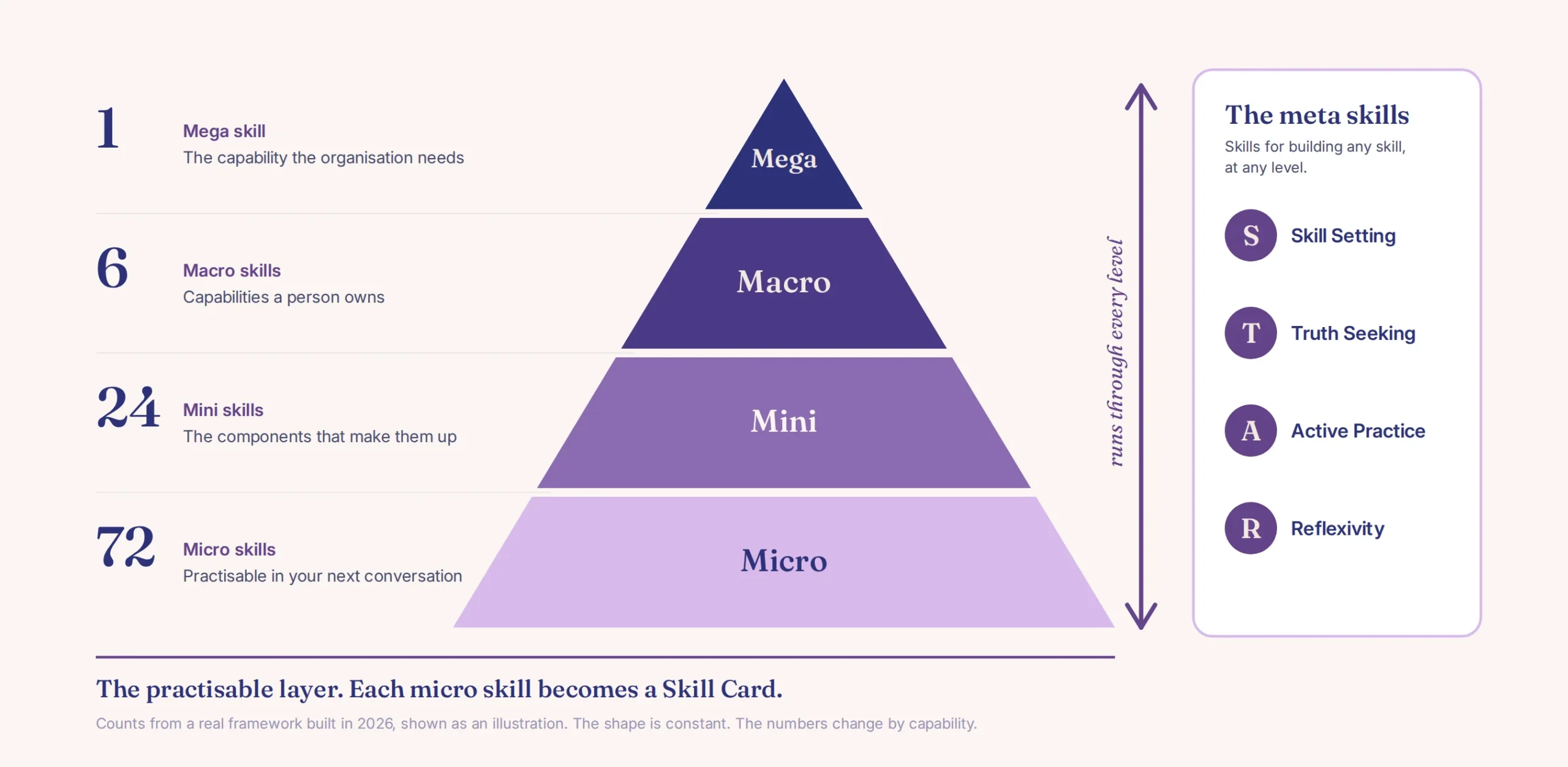
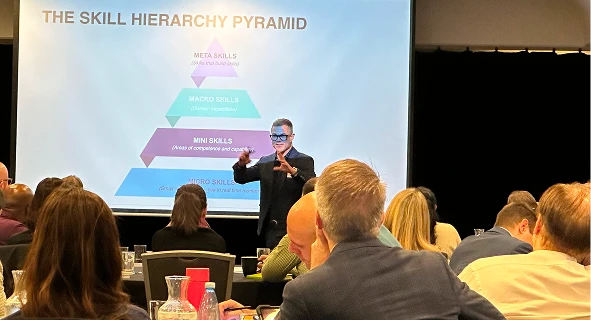
Every capability you care about is made of smaller capabilities. Break it down far enough and you reach a level small enough to practise on a Tuesday.
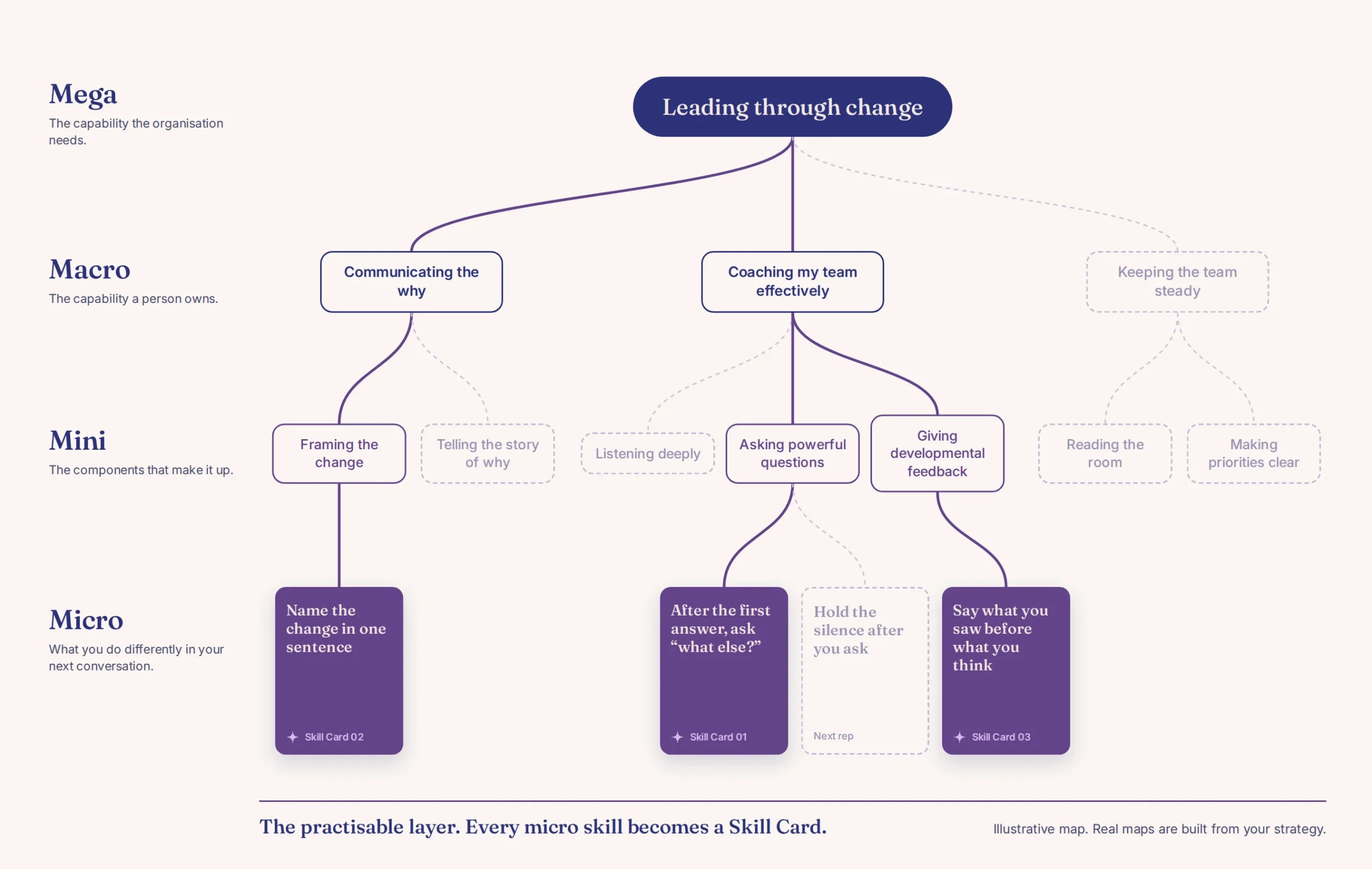
Here is one example.
MEGA
Leading through change
The capability the organisation needs.
MACRO
Coaching my team effectively
The capability an individual owns.
MINI
Asking powerful questions
The components. Alongside listening deeply and giving developmental feedback.
MICRO
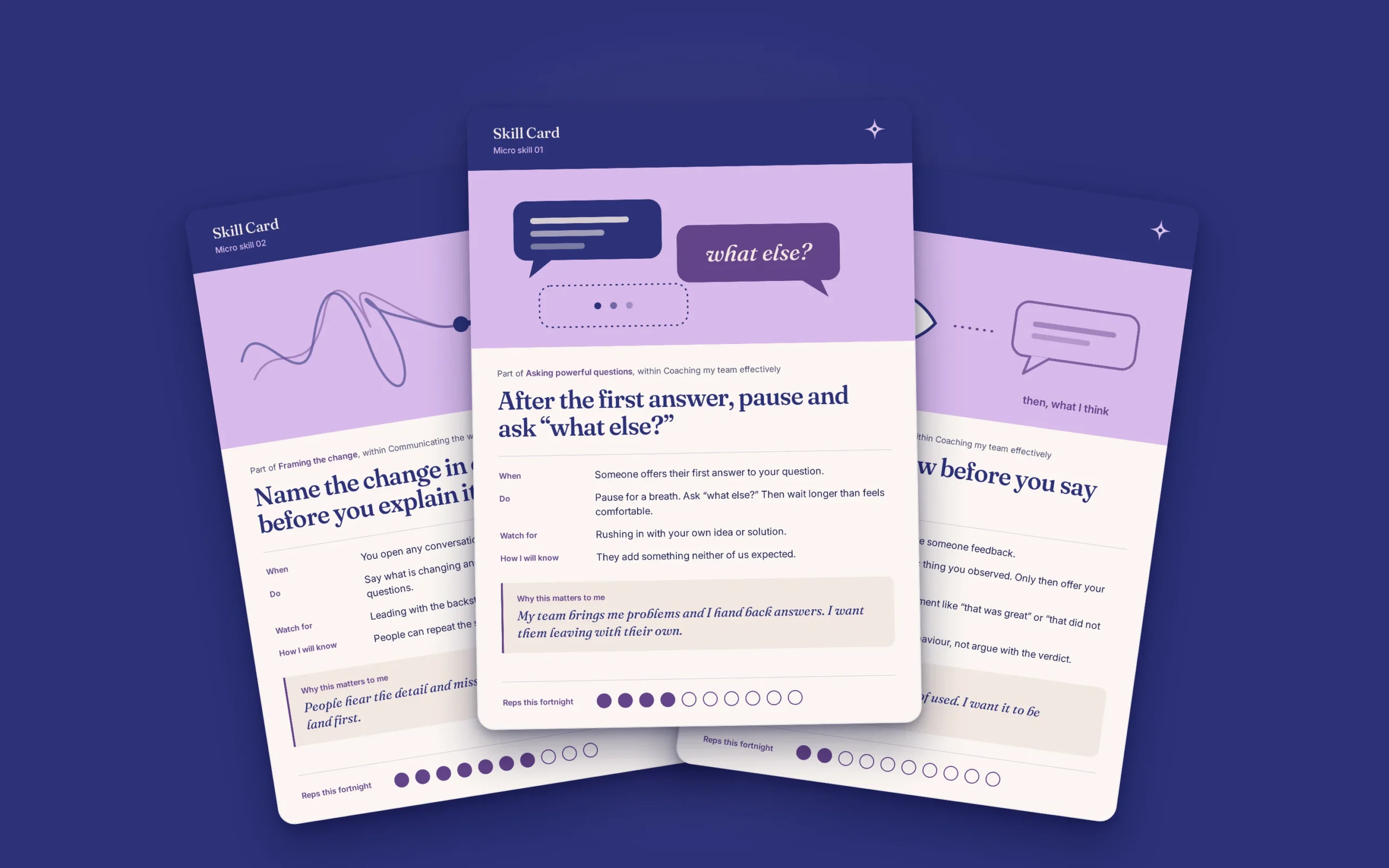
After someone offers their first answer, pause and ask “what else?”
The thing you can actually do differently in your next conversation.
Why the level matters
Almost every leadership programme operates at the macro level or above. It talks about coaching, or influence, or strategic thinking. All of which are real, and none of which can be practised, because they are too large to attempt.
Practice requires something specific enough to attempt, small enough to repeat, and observable enough that someone can tell you whether you did it.
That is a micro skill. It is the level almost nobody works at, and it is where development actually happens.
Part TWO
STAR : the four meta skills
Skills for building skills. Once a person has these, they can develop any capability they need, including capabilities that do not exist yet.
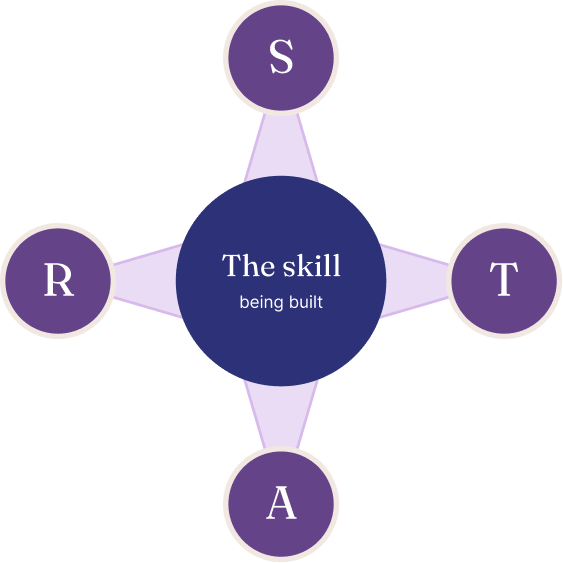
Skill Setting
Break the capability down until you reach something
practisable, and choose the right thing to work on.
Truth Seeking
Find out where you actually are. The minimum you need to
know to practise well, from feedback, evidence and
exemplars.
Active Practice
Practise with intention in real work conditions. Set up
the attempt, notice what happened, adjust.
Reflexivity
Capture what you observed, review it on a rhythm, and feed
it back into the next attempt.
Skills for building skills. The method teaches the method.
One meta skill per chapter of Leading with Skill. Runs inside
every beat of 4P.
These are the skills that build every other skill.
They’re how capability compounds into capacity.
Part THREE
The 4P Cycle
Prime. Plan. Practice. Progress.
Not four steps you complete and tick off. A cycle that becomes a way of working.
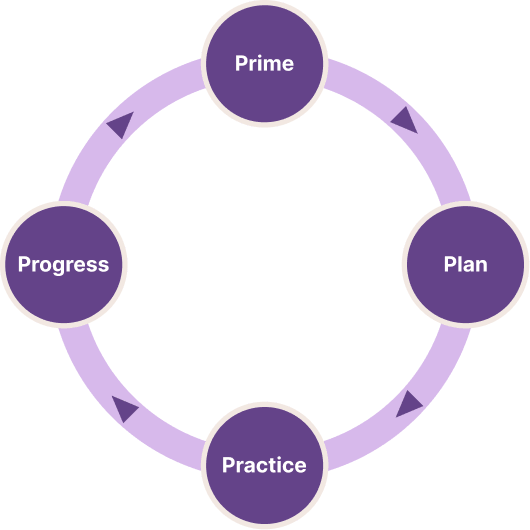
Prime
Why this skill, for this work. Readiness, manager
involvement, the environment.
Plan
The Micro Skills that Matter, Chosen and owned.
Practice
In Real Work - the meeting, on the call, in the project.
Deliberate practice in the flow of daily work.
Progress
Reflect, adjust, celebrate, .
Visible improvement fed into the
next cycle.
Ten minutes a week. One hour a fortnight. One day a quarter.
The process is the practice. The method teaches the method.
What people receive.
Not a workbook. Artefacts they built. A development plan they wrote, in their words, for reasons that matter to them. Skill Cards they created. A practice structure mapped to their actual calendar. A capture and review rhythm they designed.
They do not just learn about developing capability. They develop the capability to develop capability, by doing it, on their own real development needs, in the room.
Part Four
Real results, measured
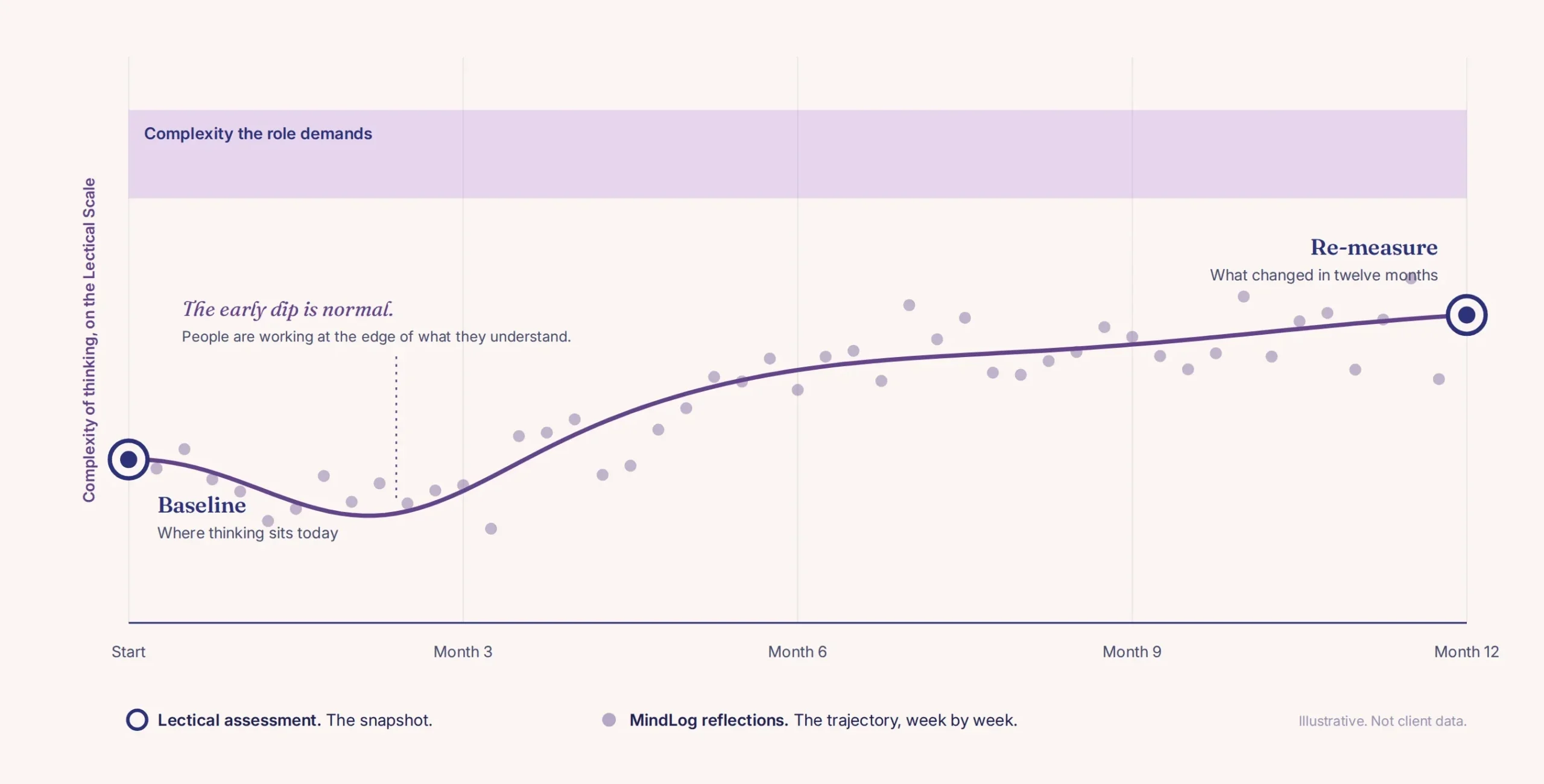
Most programs measure satisfaction. We measure two things that actually matter.
Capability: what people do. Named skills, observed in real work, by people who can see them. Baseline at the start, re-measured at the end, behaviour change recorded.
Capacity: how people think. Lectical assessment, built by Dr Theo Dawson on a century of developmental research, measures the complexity of a person’s thinking against a validated scale. Growth becomes a number you can trust.Together, they answer the question every executive eventually asks: what changed?
PART FIVE
The Multiplier
The offsite is a lump sum, expensed, never topped up. A micro skill practised on purpose is a deposit that stays. Practice in the flow of work is the regular contribution. Measurement is the statement, not the receipt. The manager as coach is reinvestment. And the capability to build capability is where the interest earns interest.
THE MOST EXPENSIVE YEAR IS THE ONE YOU WAIT.
The manager as skills coach
This is the part most programs skip, and it is the reason most programs fail.
People come back from development into environments that do not notice. No observation, no feedback, no acknowledgement that anything is supposed to be different.
Micro skills are observable by design. That means a manager can watch for them, name them, and give feedback on them without needing to be trained as a coach. The manager’s role becomes specific and small enough to actually do.
It is also what makes this scale. The capability does not live with me. It lives with your managers.
It is also what makes this scale. The capability does not live with me. It lives with your managers.
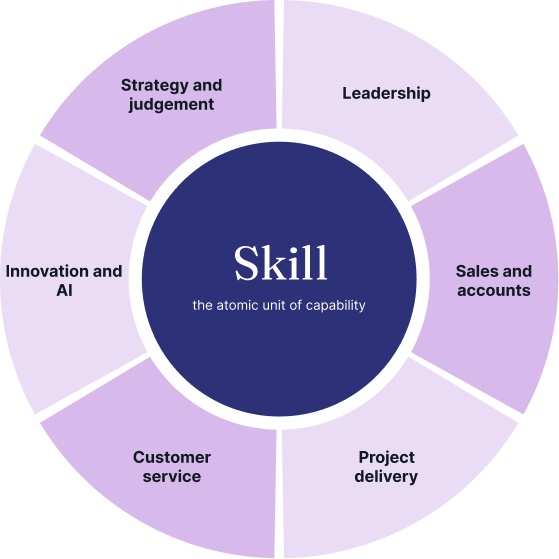
engagement, bench strength, change adoption
on time, on scope, less
rework
execution, prioritisation
resolution, complaints,
churn
pipeline, conversion,
share of wallet
adoption, experiments, time to value
Same architecture of skill. Same 4P cycle. Same measurement.
THE DOMAIN IS THE VARIABLE. THE STRATEGY TO SKILL WORKSHOP IS WHERE MOST FUNCTIONS START.
One Claim. Many Applications.
The domain is the variable. The method is the constant.
Leadership is the door. The same architecture of skill, the same 4P cycle and the same measurement apply to whatever the strategy needs next: a sales number, a delivery problem, a service score, an AI adoption target, a plan nobody can execute.
The skills come from your own best performers, never from a generic model. That is how it stays credible in every domain.
Start with one must-win.
The Strategy to Skill Workshop takes one strategic priority, your leadership team and one day. You leave with the skills named and the first practice cycle running·